Southeastern is encouraging customers to check if their usual train journey is affected by the Autumn timetable, which will operate from Sunday 11 October until Saturday 12 December.
The amended timetable includes a number of temporary changes designed to help the railway manage seasonal challenges, including fallen leaves and periods of wet weather.
Further details of the minor amends to the timetable can be found below.
|
Where |
What's changing |
What customers may notice |
|
Across the network |
Some trains are retimed. Many are early-morning services that leave 1–5 minutes earlier. |
Journeys may arrive a few minutes later than usual. Customers should check times, as their usual train may leave a little earlier or arrive a little later. |
|
Victoria to Orpington (weekdays, off-peak and evenings) |
Some trains will not stop at West Dulwich, Sydenham Hill, Penge East or Kent House. |
Every station is still served, but not by every train. Customers should check which train stops at their station. |
|
Dartford to Cannon Street via Charlton and Blackheath |
Some weekday morning and evening trains won't call at St Johns. |
Other trains still stop at St Johns. Customers may need to catch an earlier or later service. |
|
Dover Priory to Victoria via Faversham (weekdays and Saturdays) |
Trains are retimed by up to 8 minutes. |
Trains towards London leave up to 8 minutes earlier; trains towards Dover arrive up to 8 minutes later. |
|
Metro services |
Small re-timings on Orpington–Cannon Street, Hayes–Charing Cross and Victoria–Gravesend via Bexleyheath. |
Changes of up to 4 minutes on some off-peak and weekend services. |
Why do we make timetable adjustments in the autumn
Each autumn, leaves can create a slippery layer on the rails, reducing the grip between train wheels and the track. Combined with seasonal weather conditions, this can make running a railway more challenging and means trains sometimes need more time to accelerate and brake safely.
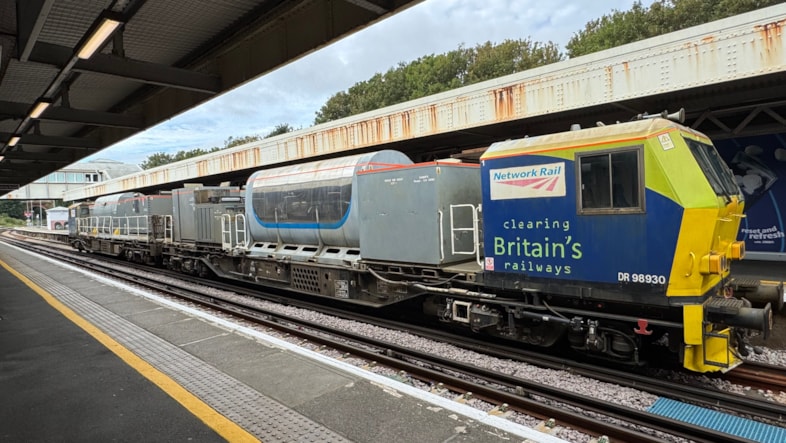
To help reduce disruption, Southeastern and Network Rail prepare throughout the year by managing trackside vegetation, running specialist rail treatment trains and introducing targeted timetable changes designed to provide additional flexibility where it is needed most.
The approach has already shown positive results. Last autumn, Southeastern delivered around 84,000 more on-time stops and 750 fewer unplanned cancellations compared with the ten-year autumn average.
This year's autumn timetable has been developed alongside work taking place across the network to manage the effects of dry soil conditions following a prolonged period of exceptionally warm and dry weather. While some routes continue to be affected by speed restrictions as infrastructure work is carried out, the autumn timetable will provide greater certainty for customers during this challenging period.
David Davidson, Chief Operating Officer for South Eastern Railway, said: “Millions of trees grow on and alongside the railway, and each autumn thousands of tonnes of leaves fall onto the tracks. When leaves become wet, trains compress them into a thin, slippery layer on the rail. Much like black ice on the roads, this can reduce traction and affect braking and acceleration.
“Just as drivers would not speed over black ice, we cannot compromise passenger safety by operating trains at full speed in areas affected by leaf fall.
“In parts of our network that are particularly prone to heavy leaf fall, Southeastern introduces autumn timetables with adjusted journey times and stopping patterns. These changes give drivers additional time to operate safely in challenging seasonal conditions, helping passengers reach their destinations as safely and reliably as possible.
“These revised timetables are available through journey planners, on our website and at stations.”
Check before you travel
Customers can check their journey and find out more information at: www.southeasternrailway.co.uk/autumn