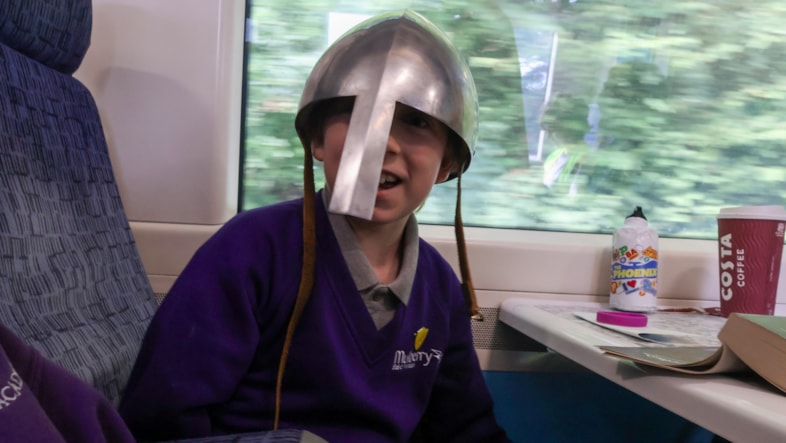
Schoolchildren across Canterbury will be able to travel free by train to see the Bayeux Tapestry at the British Museum, with South Eastern Railway providing 700 complimentary return tickets for pupils and accompanying adults.
By covering the cost of rail travel, Southeastern aims to make a once-in-a-generation cultural experience more accessible to young people from Canterbury, where modern research shows the tapestry could have been created.
South Eastern Railway previously supported schools in the Hastings and Rother area to visit the British Museum. Thirty schools took part in the scheme, helping 1,138 pupils and accompanying adults travel to see the Bayeux Tapestry, many of whom would not have had the opportunity otherwise.
The success of that programme showed how removing transport costs can help more schools access educational opportunities and give young people the chance to engage with the history of their own region first-hand.
George Paterson, South Eastern Railway's Stakeholder Engagement Manager, said:
"We know that for many parents, tight budgets cannot always stretch to cover school trips. In Hastings and Rother, we helped 30 schools and 1,138 pupils and accompanying adults make the journey to see the Bayeux Tapestry, giving many young people access to an experience they may otherwise have missed.
"We're now extending that opportunity to Canterbury with 700 free return tickets. By removing the cost of travel, we hope more pupils will be able to experience this remarkable piece of history for themselves and access valuable learning opportunities beyond the classroom."
Schools in the CT1, CT2, CT3 and CT4 postcode areas can apply for free travel for groups of up to 40 people. The tickets will be available for visits between 1 January and 31 July 2027
The initiative forms part of Southeastern's wider work to improve access to education, culture and opportunity for the communities it serves.
The programme builds on South Eastern Railway's wider Bayeux Tapestry activity. In September, the operator unveiled a specially decorated Class 375 train named King Harold II, with the name chosen by around 6,000 people in Hastings and Battle through a community vote.